Jorge Bravo Abad
Professor of Physics at Universidad Autónoma de Madrid, Department of Theoretical Condensed Matter Physics. Member of IFIMAC.
Research and teaching at the fronteir between physics and artificial intelligence.

Short Bio
Professor of Physics
Universidad Autónoma de Madrid
Department of Theoretical Condensed Matter Physics. Member of IFIMAC.
Fulbright Visiting Professor
Massachusetts Institute of Technology
Visiting Associate Professor at the Physics Department.
Postdoctoral Research
Massachusetts Institute of Technology
Research in the groups of Prof. John D. Joannopoulos and Prof. Marin Soljačić.
Ph.D. in Physics
Universidad Autónoma de Madrid
Under the supervision of Prof. Francisco José García-Vidal and Prof. Luis Martín-Moreno.
Research
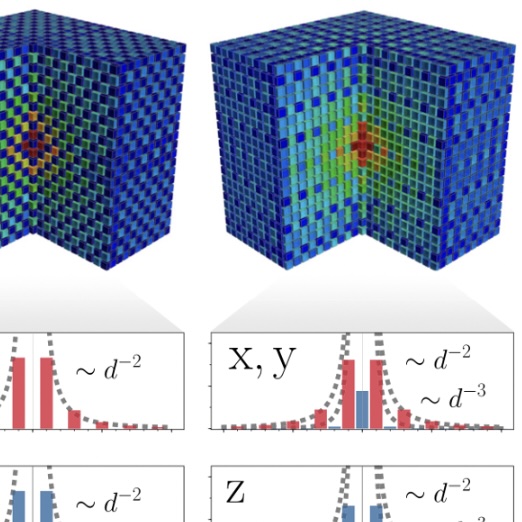
AI techniques have the potential to fundamentally transform traditional approaches to scientific research. In physics, these techniques are employed to tackle complex problems in a broad variety of fields, including condensed matter physics, materials science and quantum information technologies. Our research work on AI focuses on creating and tailoring new algorithms, models and methodologies to address the specific challenges of scientific research in physics. We are also committed to explore how physics insights can help to develop fundamentally new AI approaches and frameworks. We are particularly interested in approaches that are interpretable, explainable, and physically grounded — methods that go beyond predictive accuracy to reveal new scientific insight and understanding.
Selected Publications
Books
Some of the most exciting moments in my career have come from watching an AI solve scientific problems in ways no human would have thought of — or seeing scientific principles and insights unlock new kinds of machine learning. I've spent years living at this intersection, and recently I started writing in long form (so far in Spanish editions) about what I've seen and learned — both for specialists and for anyone curious about where science is heading.
February 2026
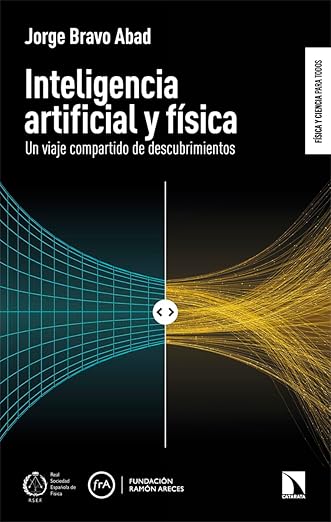
Artificial Intelligence and Physics: A Shared Journey of Discovery (Spanish Edition)
Los Libros de la Catarata
What do the laws that govern the universe have in common with the algorithms that allow machines to learn? Physics and artificial intelligence (AI) have long been in fruitful dialogue—one that has accelerated dramatically in recent years, reshaping how we think about nature and intelligence.
April 2026
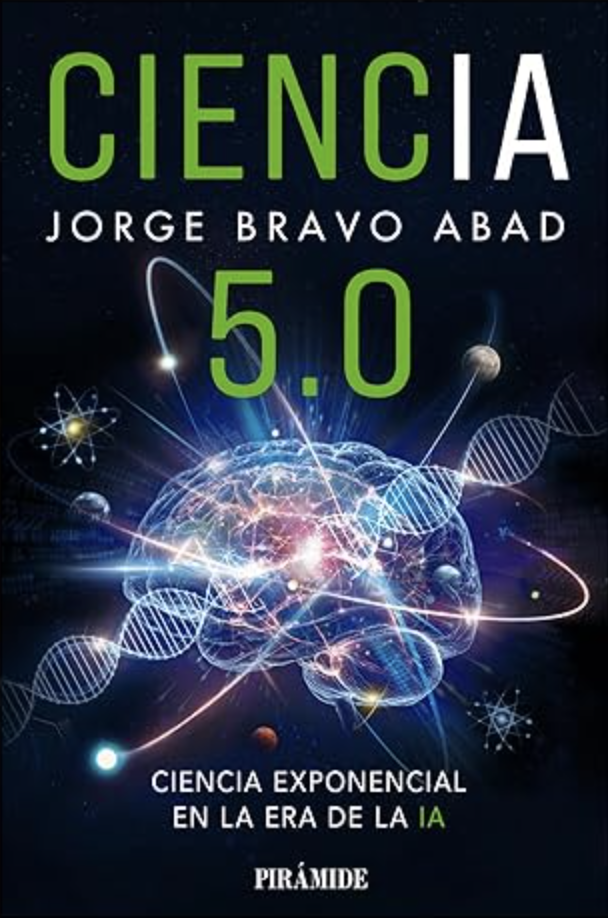
Science 5.0 (Spanish Edition)
Ediciones Pirámide
Algorithms that predict protein structures in minutes, when it used to take years. Systems that anticipate extreme weather events with unprecedented accuracy. Robots that speed up chemical discovery by combining hypotheses and experiments. Neural networks that find mathematical proofs where there were once only conjectures. This is not science fiction or a distant promise: it is happening right now, in labs around the world. Ciencia 5.0 guides us through this new territory with rigor and clarity. Without requiring prior knowledge, the author explains how artificial intelligence is transforming science from the inside out: how we formulate questions, analyze data, and turn information into discovery. From machine learning to the frontiers of quantum computing, from medicine to the exploration of the cosmos, the reader will tour the key ideas behind a revolution already underway. But this book is also a reflection on what it means to be a scientist when machines become research partners; on the risks of speed without responsibility; on who signs discoveries and who benefits from them; and on how to build a more powerful science without losing its human core. The science of the future is being written now. Understanding it is the first step toward deciding—together—where we want it to take us.
Contact
I'm open to academic collaborations, invited talks, and research discussions. Feel free to reach out through the email below.
Universidad Autónoma de Madrid
28049 Madrid, Spain